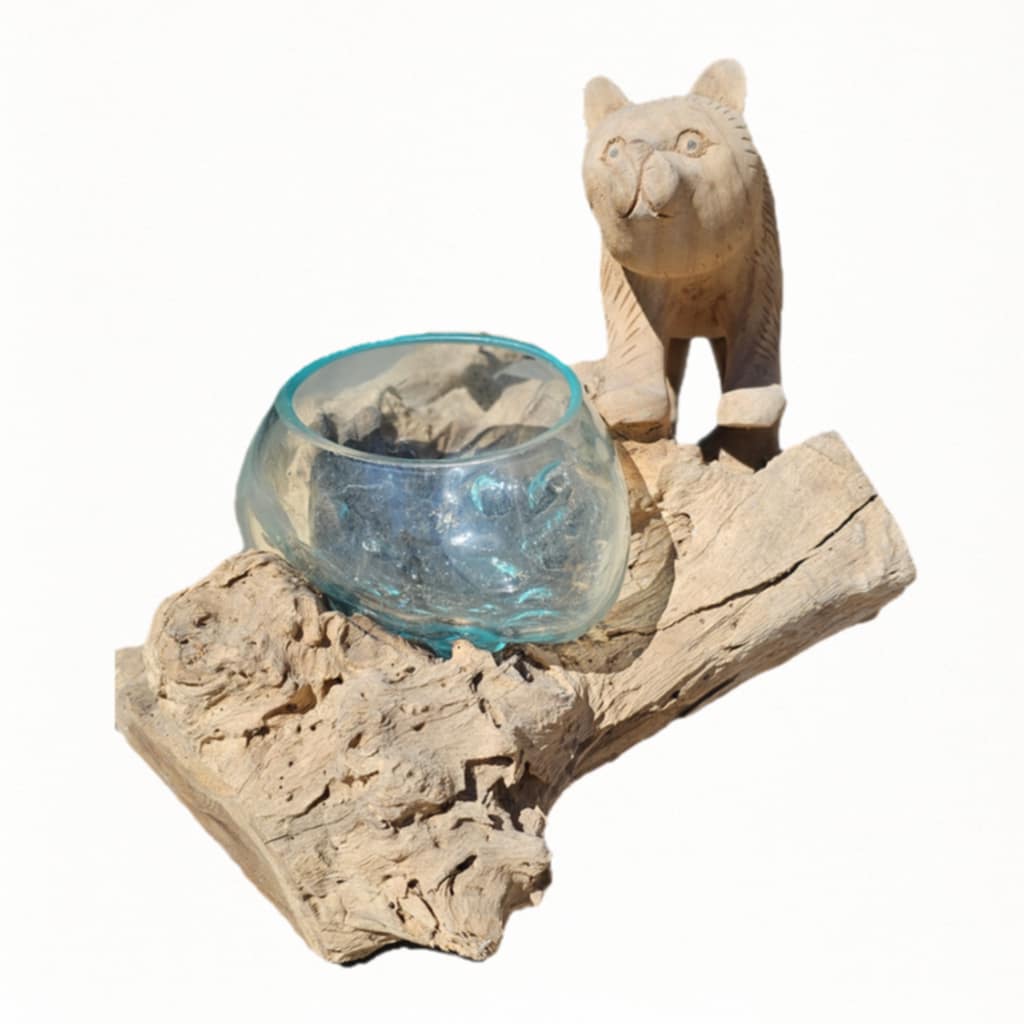
Dua Twin Bowls: Two-Part Glass Set on Natural Root Wood, 46 cm
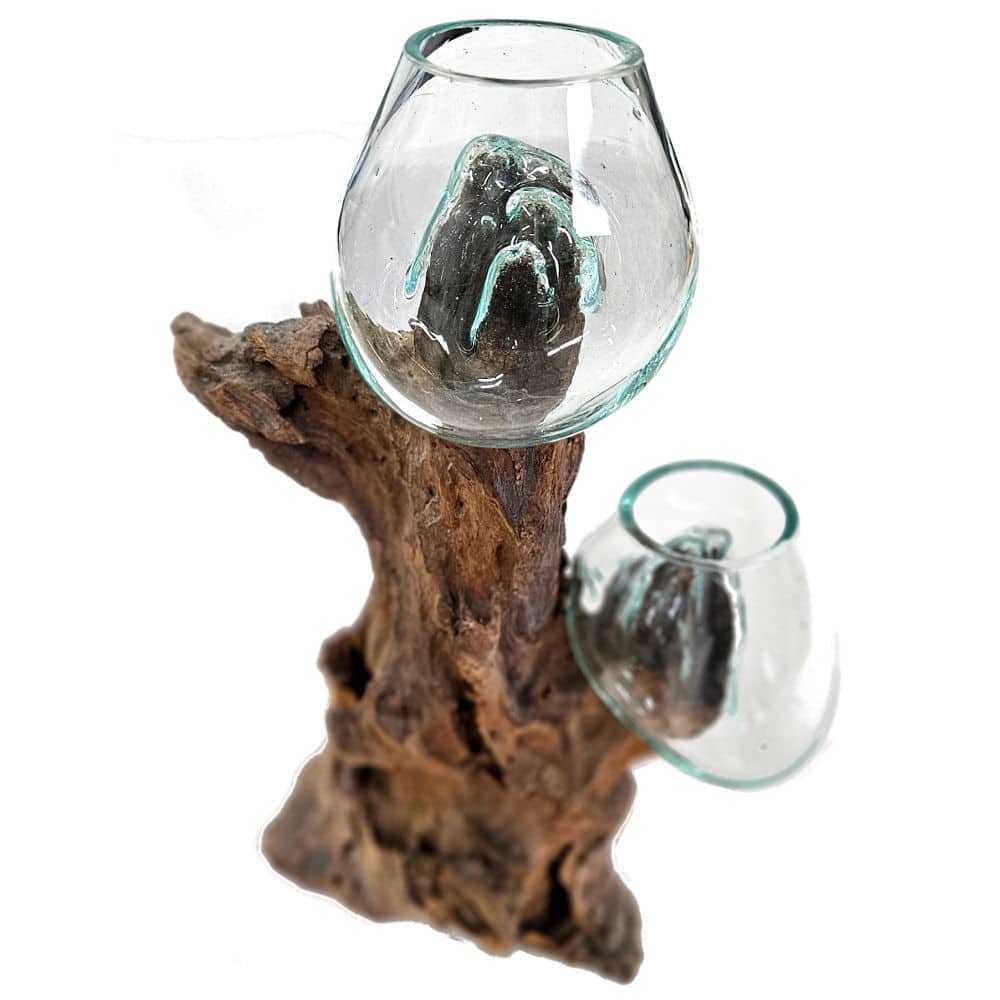
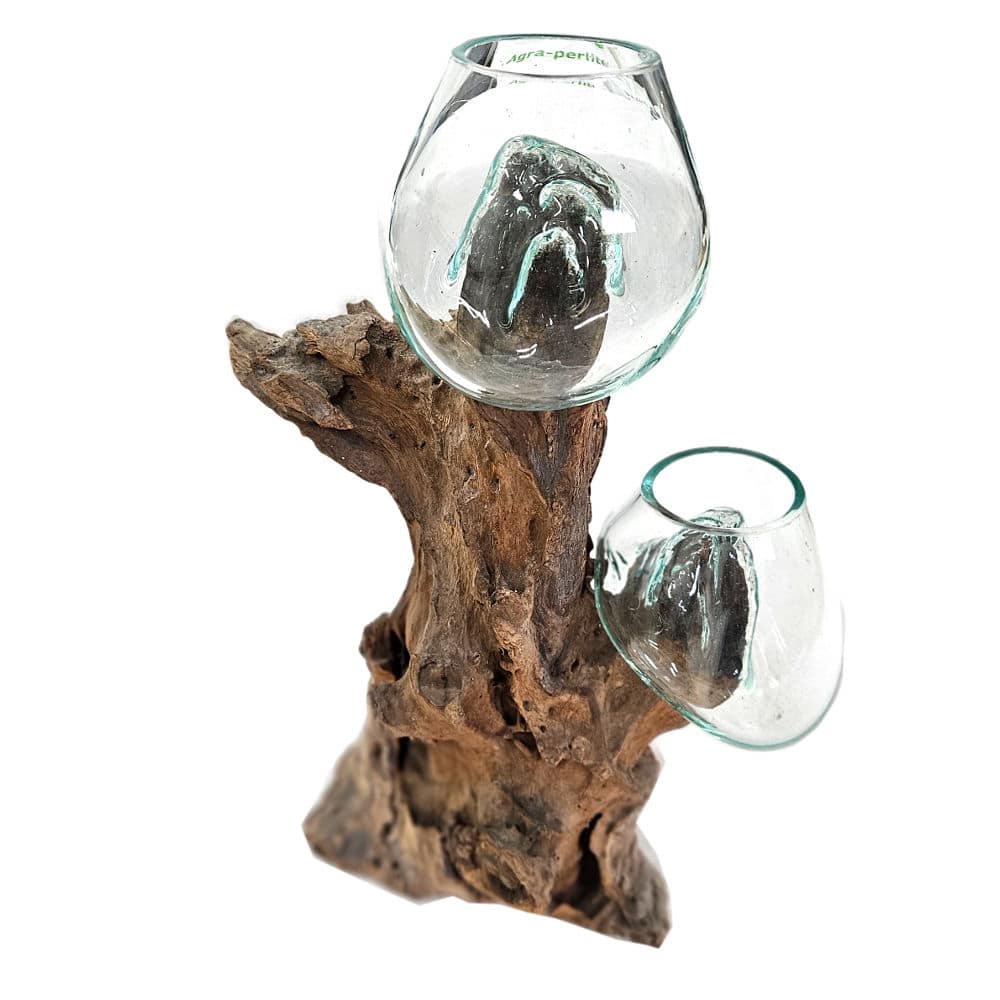
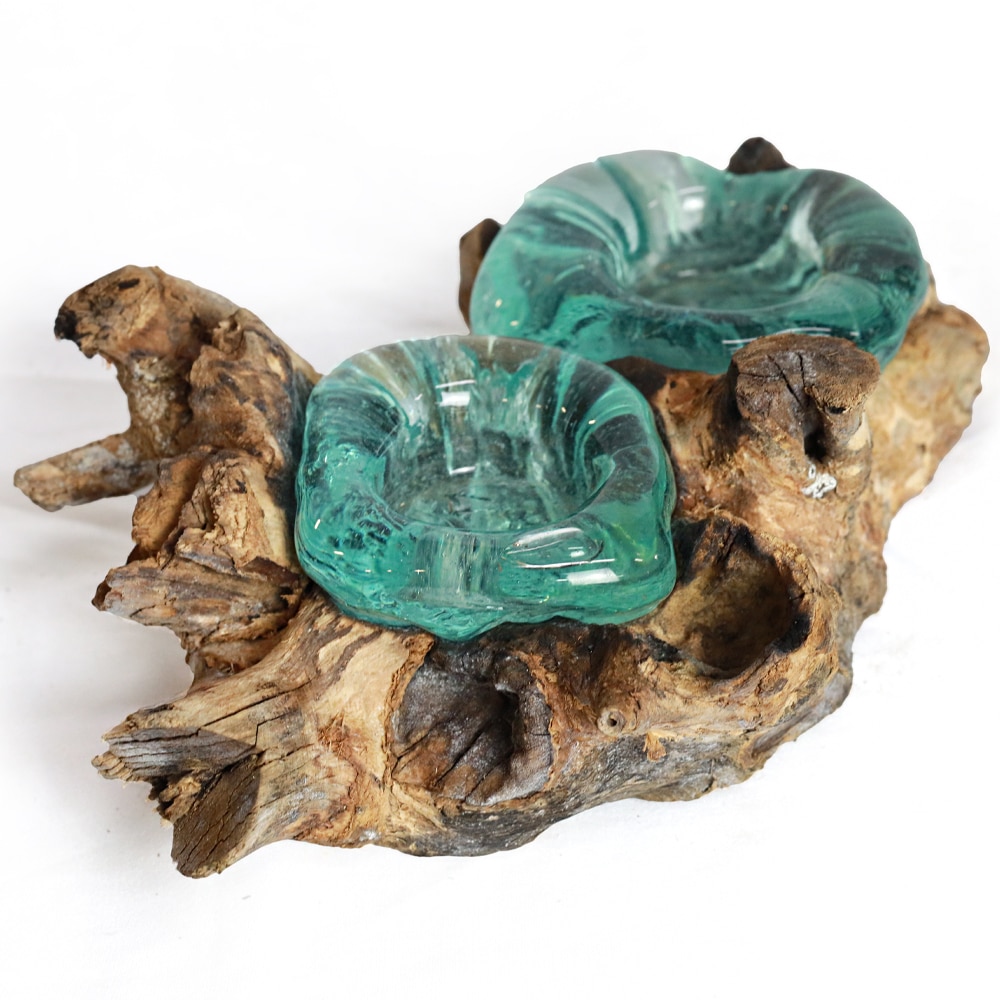
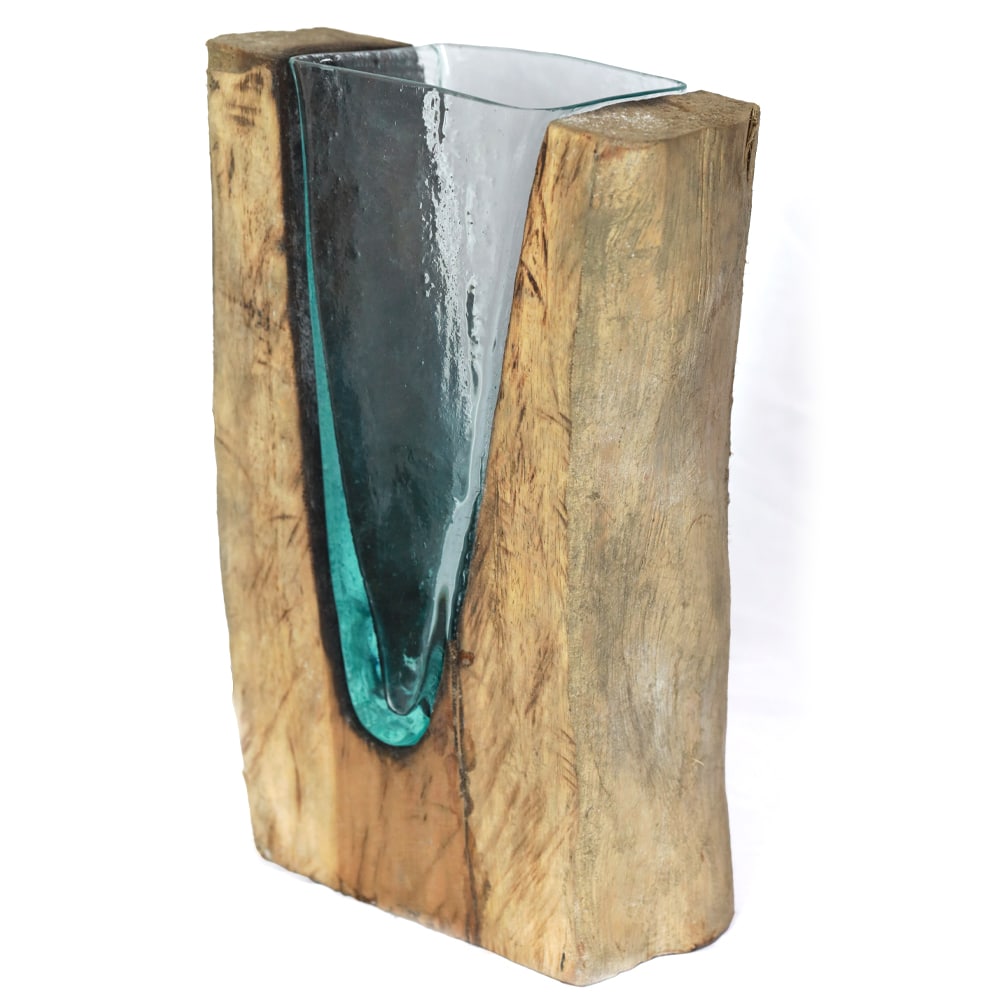
Our Dua Twin Bowls combine melted glass with untreated root wood to create an impressive unique piece. The name Dua, which means "two" in Indonesian, describes the two delicate glass bowls that gently integrate into the organic wood, forming a harmonious unit. They resemble sparkling drops of water that gently rest on the wood surface.
Traditional Glass Melting in Bali – A Play of Fire and Nature
Bali's craftsmanship reflects a close connection to nature. Melting glass on root wood is an artistic process that expresses this relationship in a special way.
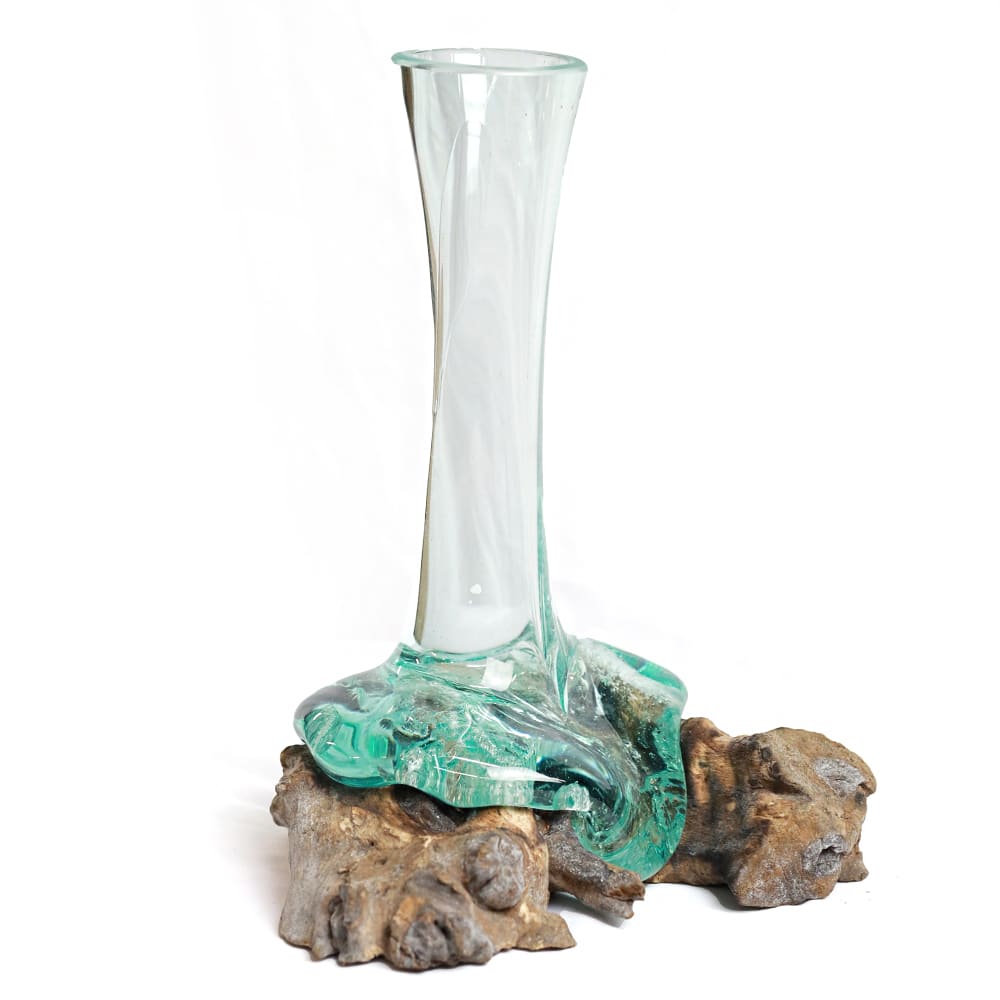
The glass is heated until it becomes liquid and luminous. In the next step, the hot glass mass is carefully poured onto the wood, where it conforms to the natural shape, fills indentations, and caresses edges before slowly cooling down. The glass is then ground and polished, resulting in a clear, shiny surface. This creates a unique art object that can never be exactly replicated in its form.
Product Details – Dua Twin Bowls
- Material: Melted glass on untreated root wood
- Design/Form: Two separate bowls, organically embedded in a naturally grown piece of wood
- Dimensions: Approx. 46 cm height, width and depth vary depending on wood structure
- Usage: Versatile as a vase, candle holder, or decorative bowls
- Recommended Location: Living rooms, conservatories, or covered terraces
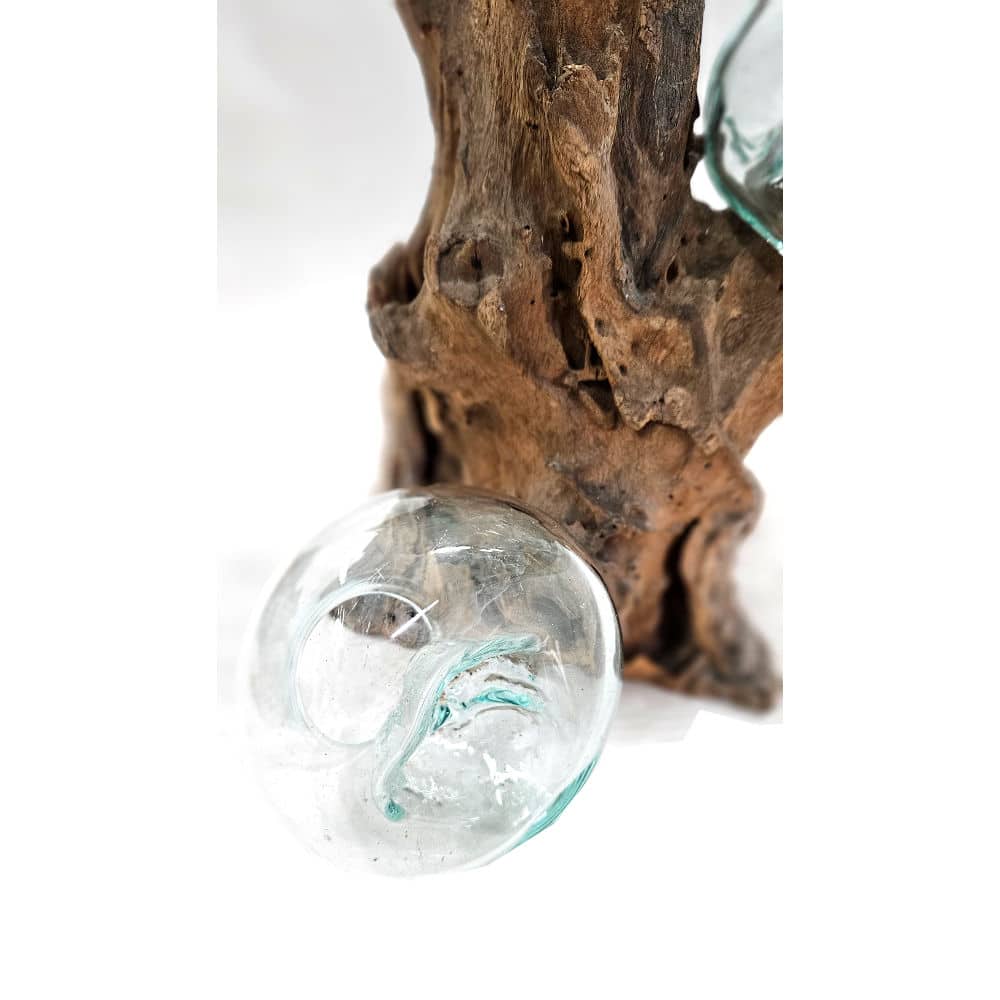
- Special Feature: Removable bowls for easy cleaning, precisely melted
Dealer Note
Manik Rupa continues this art in his shop with great dedication – despite significant challenges and a lack of successors. His works consist of artistically melted glass on impressively large pieces of root wood. The combination of wood and glass makes these pieces so special and distinctive. We hope that this tradition will be preserved for a long time and are pleased to offer these special pieces in our Bali Dreams Selection.
Handmade Note
Each Dua Twin Bowls is carefully handcrafted. The natural materials and traditional melting technique result in small differences in shape, size, and structure – an unmistakable sign of authentic Balinese craftsmanship.
For more information about Balinese craftsmanship and why perfection is not always the goal, you can find it here.